Caregivers in Context: “Come See Me in the Good Light” Explores Wonder, Levity, and Love in the Face of Terminal Cancer
Caregivers in Context: “Come See Me in the Good Light” Explores Wonder, Levity, and Love in the Face of Terminal Cancer
By Aimie Billon
Caregiver Action Network Partnerships Consultant
Academy Award-Nominated Documentary Explores Devotion and Gratitude in End-of-Life Family Caregiving
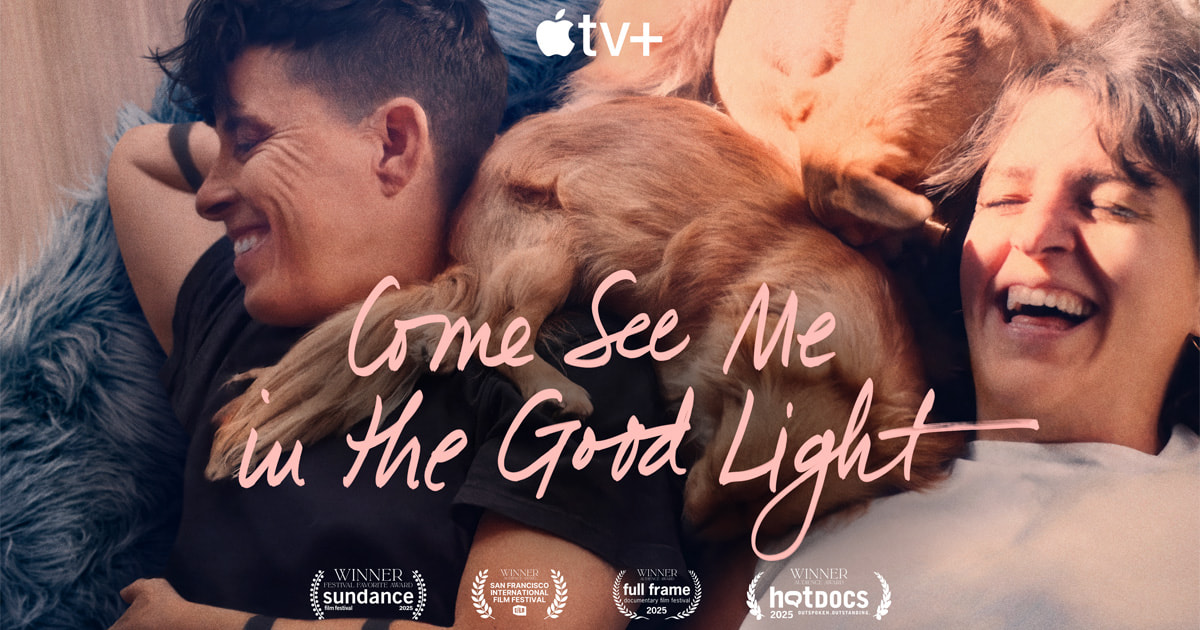
Apple TV’s Academy Award-nominated Come See Me in the Good Light is a profound celebration of life, joy, and wonder in the face of death, exploring the deepening bond and continued laughter between two partners as they navigate incurable cancer.
The film stars Colorado Poet Laureate Andrea Gibson (they/them) and poet/author Megan Falley (she/her), and was produced by comedian/actor Tig Notaro, Jessica Hargrave, Stef Willen, and director Ryan White. Executive producers also include singer/songwriters Brandi Carlile and Sara Bareilles, authors and podcasters Glennon Doyle, and Abby Wambach (We Can Do Hard Things).
Filmed in the last year of Andrea’s life, Come See Me in the Good Light tracks the many treatments, agonizing waits for blood results, and the gradual erosion of a vibrant creative life. Throughout this journey, Andrea’s wife – Megan – demonstrates emotional regulation, patience, and a willingness to sit with pain—both Andrea’s physical pain from cancer (CAN Cancer Toolkits and Webinars) and the persistent anticipatory grief that often accompanies terminal illness.
What makes this glimpse into vulnerability so remarkable is the return to wonder and gratitude offered by the couple’s devotion and humor.
As part of our Caregivers in Context blog series, Caregiver Action Network (CAN) is grateful to highlight how Come See Me in the Good Light shines a light on the beauty of caregiving despite the trauma, anticipatory grief, and the relentless demands of terminal cancer.
EMOTIONAL LABOR & A TALE OF TWO BODIES
With a two-year prognosis, the film opens after several rounds of chemotherapy and treatments intended to prolong Andrea’s life. Andrea grapples with intense pain that at times feels as if their pelvis is breaking. Megan responds not with grand gestures but with hundreds of small acts of care each day—adjusting pillows, managing medications, coordinating appointments, and simply holding Andrea’s hand.
In one memorable scene, Megan uses an aging app on her phone to show Andrea what they might look like if they had another thirty years together. Andrea—desperate to simply reach fifty—breaks into tears of joy at the sight of their imagined wrinkles.
Yet with the camera’s focus on Andrea’s body, Megan’s own experience becomes quieter and more invisible.
At the time of Andrea’s diagnosis, Megan had begun writing a memoir about her own struggles with body dysmorphia, driven by the realization that if Andrea could love Megan’s body, perhaps she could too. But as caregiving intensified, Megan’s writing—and much of her personal life—was placed on hold in favor of spending every possible moment with her partner. In a quiet moment, Andrea reads a chapter from Megan’s manuscript and rebukes her saying, “You’re the main character [of the book]—not me.”
This dynamic mirrors broader caregiving trends. According to the 2025 Caregiving in the U.S. report:
- 64% of caregivers report emotional stress from caregiving.
- 20% of caregivers report their health as fair or poor, and caregivers who live with their care recipient report poorer health than other caregivers.
- Nearly 25 percent of caregivers indicate difficulty in caring for themselves because of caregiving.
- More female than male caregivers report poor health and physical and emotional strain.
Away from Andrea, Megan muses to the camera that at 35 years old, she feels too young to be holding all of caregiving, grief, and trauma. Yet national data suggests this experience is common: 44.2% of caregivers are age 18-45, according to The National Alliance for Caregiving in collaboration with AARP, July 2025). This dynamic is seen again in another quiet moment of bad news, when Megan suppresses her own reaction in order to center Andrea’s and asks, “What does that feel like to you?”
CAREGIVING IN END OF LIFE: AN EXERCISE IN LAUGHTER & WONDER
From the film’s opening moments, Andrea acknowledges the gravity of the situation while offering a reframing:
“Stay with me because my story is about happiness, once we find we do not have forever to find it.”
Andrea adds, almost playfully,
“I was wasting a lot of seconds prior.”
This acceptance anchors the couple in the present moment, opening up their fleeting time together to unexpected silliness and play. During one round of treatment, Andrea uses sleight of hand to make it appear her thumb has separated and declares it might be a serious medical injury more important than a tumor.
Beyond humor, Andrea and Meg cultivate an ethos of gratitude for every moment that remains. Andrea deploys the mantra:
“Everything that you’re feeling right now—name it love.”
In this framing, fear, anger, grief, and joy all become expressions of love rather than deficits. Together, the couple practices emotional co-regulation, grounding themselves not in dread but in awe.
CAN’s Navigating Caregiver Grief: Support & Coping Strategies During Challenging Times outlines tactics for those navigating loss. And, CAN’s Refueling After Caregiving: Self-Care, Grief, and Recovery offers ways for caregivers to replenish during times of great stress.
One of Andrea’s poems is about setting a world record for goosebumps (below), a record they hope can also be broken by someone else, —perhaps another caregiver or loved one experiencing the profound intensity of connection. And, it is this sweetness and beauty that remains with Megan after Andrea’s passing.
RECLAIMING IDENTITY AFTER CAREGIVING
The caregiving journey often transforms identity. When caregiving ends—whether through recovery, institutional care, or loss—many caregivers must rediscover who they are beyond the role. We explore these transitions in Life After Caregiving: A Guide To Rediscovering Yourself and Moving On After Caregiving: Finding Purpose and Healing.
We also offer a range of resources to help caregivers protect their own health and goals, including:
- Free, one-on-one support from our Caregiver Help Desk
- Access to peer support and respite resources
- Guidance on returning to education or work after caregiving ends
- Emotional wellness tools to help reclaim personal identity
Explore all of CAN’s caregiver support tools.
FINAL THOUGHTS: COME SEE ME IN THE GOOD LIGHT AS A PATH FOR ALL CAREGIVERS
In what could easily be a bleak story, Andrea and Meg demonstrate something extraordinary: love as an action, the mundane as sacred, and acceptance as a gateway to joy. As death draws nearer, life becomes sweeter and more vivid for two partners who find solace in co-regulation, laughter, and continued devotion.
The documentary offers viewers a rare look at this sacred period of caregiving—and perhaps the chance to feel a few goosebumps themselves.
Resources mentioned in this blog:
For more caregiver stories, tools, and real-life reflections, follow CAN and subscribe to our newsletter. The Caregivers in Context series brings you deeper into the pop culture moments that reflect the caregiving experience.
—
“Acceptance Speech After Setting the World Record in Goosebumps”
By Andrea Gibson
I wasn’t by any means a natural.
Was not one of those wow-hounds
born jaw-dropped. I was tough in the husk.
Went years untouched by rain. Took shelter
seriously, even and often especially
in good weather, my tears like teenagers
hiding under the hoods of my eyes,
so committed they were to never falling
For the joke of astonishment.
When I was told there were seven
wonders of the world, I trusted the math,
believed I had seen none of them.
Of course beauty hunted me.
It hunts everyone. But I outran it, hid
in worry, regret, the promise of an afterlife
or a week’s end.
Then one day, in a red velvet theater
in New Orleans, I watched Maya Angelou
walk on stage. Seventeen slow steps to the mic.
She took a breath before speaking,
and I could hear god being born in that breath.
My every pore reached out like a hand
pointing to the first unsinkable lotus in the bayou
of the universe. I’d never felt anything like it.
Searched the encyclopedia for the feeling’s name
when I got home: “Goosebumps.”
Afterward, I thought – I can do this.
Started training morning to night,
Crowbar swinging like a pendulum at the wall
of my chest. Tore the caution tape off
my life and let everything touch it:
Allen Iverson on the television in his first season
with the Sixers, crossover sharp as a V of sparrows
flying through the paint like Michelangelo’s brush:
333 goosebumps.
My baby sister, sober for the first time
in thirteen years, calling to tell me she just noticed
our mother’s eyes are green:
505 goosebumps.
One day, my friend scored tickets
to a Prince concert. Tiny venue. I was right
behind the sound booth. Prince’s entire band
That evening–women. At the end of the show,
the sound person turned around and whispered,
He didn’t play one song on his setlist the whole night.
I live on stages. I know what it is to scratch a plan
but not the whole trip and still arrive to your destination
two hundred years before your time:
421 (artist formerly known as) goosebumps.
But that’s just the fancy stuff.
Some of them came from simple facts-
it rains diamonds on Jupiter
189 goosebumps.
Blood donors in Sweden receive
A thank-you message when their blood is used:
301 Nordic goosebumps.
One night in Ann Arbor, my friend
still undiagnosed, could not uncurl her fingers
to strum her guitar, so she sang the chords instead.
It was the first time in my life I’d seen pain
become an instrument:
10 dozen goosebumps
For each and every note plucked
From the string section of her refusal to silence
her dream. After that, nothing in the world was gray.
Even the movie of my past was released in color.
The oldest man in my hometown could not
get to the door to listen to our carols.
So we went inside and sang at his bedside instead.
Twenty-four boots on the front step
Catching snowflakes with their tongues:
776 goosebumps.
At one point everything started doing it:
A sincere apology: 221 goosebumps.
An enemy’s love poem: 222 goosebumps.
The moon rising over the continental divide.
My girlfriend and I thought it was a car
driving off a cliff, and suddenly nothing
in the world was dying. You ever felt that?
A split second when nothing in the world is dying?
888 goosebumps,
and the next day I sharpened a tiny ax
So I could split the seconds myself.
Too much lives in a moment
to not feed it to the fire in the heart, slow.
A Missoula treehouse filled with candlelight:
143 goosebumps.
The octopus documentary:
54 goosebumps, multiplied by 8.
The biggest dog in the shelter
hiding behind a teacup chihuahua,
and the woman who came to adopt a cat
taking all three of them home:
1,012 goosebumps.
There is no escaping the magic now.
Beauty caught me and never let me go.
And the thing about the world record
Is– if someone breaks it after me,
and they will break it after me,
I will love that so much
that without even trying,
I’ll break it again.
—
Executive Producers:
- Ryan White (also director)
- Jessica Hargrave
- Tig Notaro
- Stef Willen
- Glennon Doyle
- Abby Wambach
- Lauren Haber
- Joe Lewis
- Colin King Miller
- Rachel Eggebeen
- Catherine Carlile
- Brandi Carlile
- Susan Yeagley
- Kevin Nealon
- Galia Gichon
- Sara Bareilles
- Amanda Doyle
- Christi Offutt
- Soraida Bedoya
- Melony Lewis
- Adam Lewis