Caregiving for a Child with a Rare Disease: A Conversation with Leslie on Turner Syndrome
Caregiving for a Child with a Rare Disease: A Conversation with Leslie on Turner Syndrome

In honor of Rare Disease Day (February 28) and Turner Syndrome Awareness Month, Caregiver Action Network’s Community Initiatives Director Nichole Goble visited with Leslie, a mom from Southern Maryland who has been caring for her daughter Gracie, now 19, since Gracie was diagnosed with Turner Syndrome at 18 months old. Leslie shares her journey — the challenges, the victories, and the deep love that drives her every day.
Tell us a little about Gracie and how you first learned about her diagnosis.
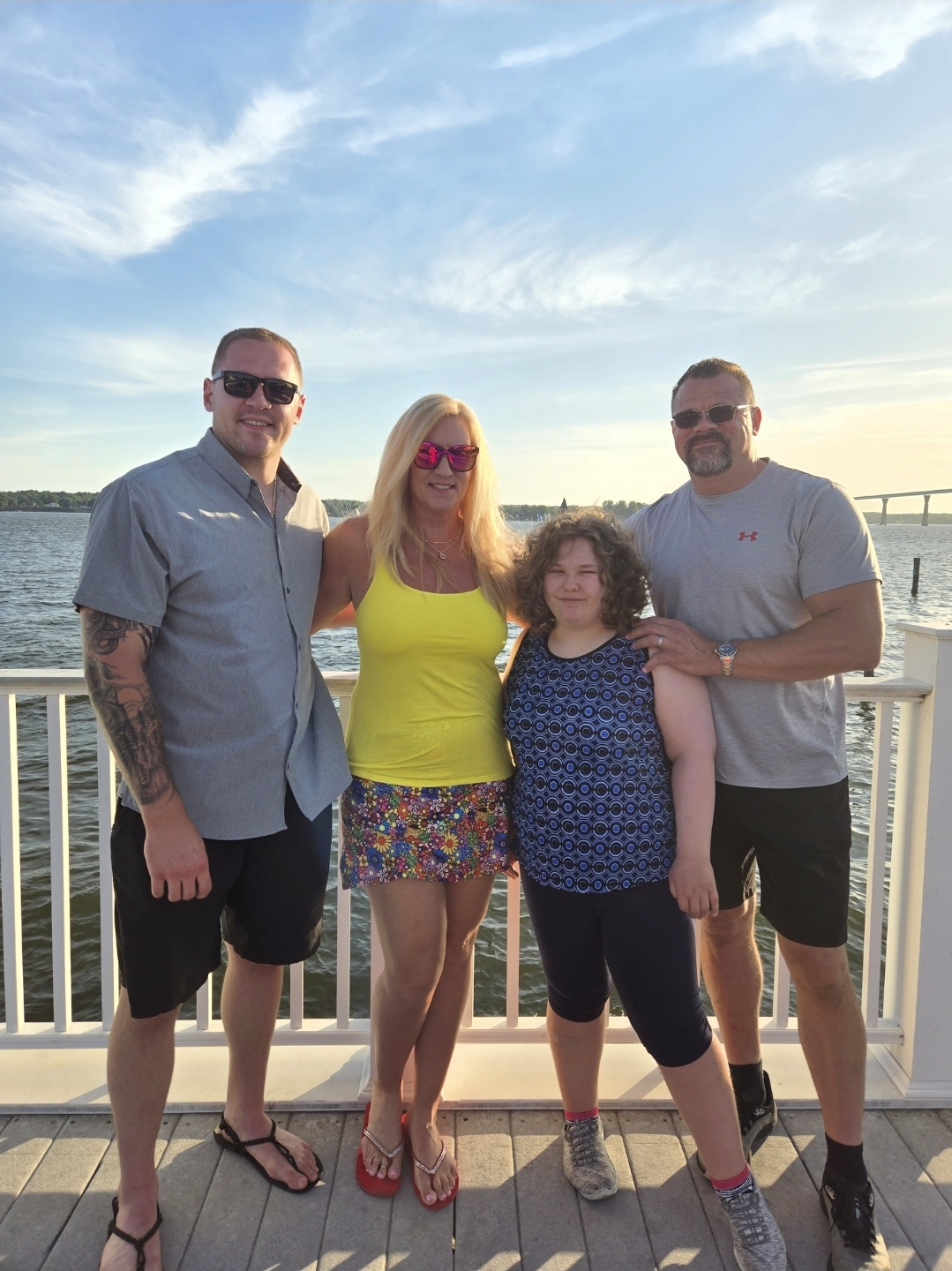
Gracie is turning 19 in March. When she was about a year and a half, we started noticing some behaviors that seemed different — she was walking backwards, lining things up. We took her to a specialist at Children’s Hospital, and he initially diagnosed her with nonverbal learning disorder. But then he ran a karyotype — a chromosomal blood test — and that’s when we learned she had Turner Syndrome. We had never heard of it. It was very new to us and very scary.
Gracie does have some of the physical features associated with Turner Syndrome — a wider chest, short stature, a short toe. My husband is six-four and I’m six feet tall, so height was something we paid attention to. With growth hormone treatment, we got her to five feet, which was a real win for us.
What were some of the earliest caregiving challenges you faced?
One of our biggest early challenges was head banging. Starting around age two or three, if Gracie was upset or needed something, instead of coming to get us, she would bang her head against the wall. She actually broke a window with her head once. For years, every time we stopped at a red light in the car, she would scream. She also went through a very aggressive stage — biting, scratching, kicking — that lasted until she was around eight years old. It was incredibly difficult trying to help her find ways to communicate her needs.
Gracie is also diagnosed with ADHD, OCD, and nonverbal learning disorder in addition to Turner Syndrome. Managing all of those layers together made every stage more complex.
How did you navigate getting the right support for Gracie, especially with schooling?
It was a process of advocating constantly. We started her in early intervention and then the public school system. She was in a typical classroom with IEP accommodations at first, but that was too overwhelming for her. Fortunately, someone mentioned a program in our school district called the Compass Program, which was specialized for autism. We actually had Gracie re-diagnosed with autism in order to access services that weren’t covered under Turner Syndrome — which became possible once the Autism Act went into effect. Getting her into that program in second grade was a turning point. She had an amazing teacher who really helped turn things around, especially with her aggression.
We fought hard to keep her on a graduation track and to get her a one-on-one paraprofessional, which we eventually did. Then COVID hit, and I was sitting with her for eight hours a day trying to teach seventh-grade math. That was one of the hardest stretches we’ve been through.
Gracie is now 19. What does her day-to-day life look like, and what are your current caregiving responsibilities?
 I still give Gracie a bath every night and help with all of her personal care. She’ll never be able to drive, and we never leave her alone — she doesn’t yet look when crossing the street. My husband and I are her safety net around the clock.
She is verbal and can tell us her wants and needs, but she doesn’t speak in full, typical sentences. She has outbursts we’re still working through, and we’re currently working with a great psychiatrist on medication adjustments. My husband is 54 and I’m 57, and honestly, I’m feeling my age. Giving her a bath isn’t as easy as it used to be, even though I work out regularly.
What keeps us going is watching her personality shine. Gracie loves animals — she wants to be a vet. She loves dressing fancy. She just went to Night to Shine through the Tim Tebow Foundation and absolutely loved it. We work hard to create social opportunities for her, keeping together a friend group she’s known since elementary school.
You’re in Southern Maryland, which is more rural. How has your location affected your access to specialists and resources?
It’s been a huge challenge. Children’s Hospital is about 40 minutes away as the crow flies, but it takes nearly two hours to get there. Johns Hopkins is even further. We don’t have Turner Syndrome specialists locally — we’re out here in Amish country.
Early on, we were getting occupational therapy through a private practice, and it was making a real difference. Then our insurance suddenly stopped covering it. I appealed it all the way to the state level and it was denied — it had something to do with a gray area between rehabilitation and habilitation codes, and this was before the Autism Act was in place. We hit insurance wall after insurance wall trying to find behavior specialists. Eventually we went to Johns Hopkins when Gracie was about seven or eight, and that truly changed our lives. But getting there, fighting for it — that was years of work.
We’ve also had challenges finding summer programming. We had Camp Inspire through Parks and Rec, which was wonderful, but COVID ended it. When it came back, it had changed. Programs that work for younger kids often aren’t staffed to support kids with more significant needs as they get older, so we’ve aged out of options that used to work.
What does planning for Gracie’s future look like for your family?
This is honestly the part that terrifies me most. My biggest goal is for Gracie to be safe, happy, and in an environment she loves when my husband and I are no longer here. She loves animals, so we’ve already been in touch with the Doors Program to explore opportunities — volunteer or work placements related to animal care. We’re also hoping to get her into our local tech center’s gateway program, though she wasn’t accepted last year due to some behavioral challenges.
Gracie is currently in the SAIL classroom and can remain in the public school system until she’s 21, which is a blessing. After that, we’re planning to transition her care to NIH. We’ve had to do a lot of financial planning — getting assets out of her name in order to qualify for SSI, and we still need to set up a special needs trust so that if something happens to us, state assets won’t disqualify her from services.
My husband’s son, Gracie’s stepbrother, is a Massachusetts State Trooper. He loves Gracie deeply, but he’s told us he’s not able to be her primary caregiver. I understand that completely. What I’ve asked of him is to check on her, make sure she’s safe and happy wherever she is, and we’ll have resources set aside so he can step in for extras that her services don’t cover. That’s the plan — but not having a full answer is terrifying.
You’ve also been a caregiver in other ways throughout your life. How has that shaped your perspective?
I feel like I’ve been caregiving my entire life. My sister had cerebral palsy — very severe — and I took on a lot growing up. Then my mom moved in with us, and I cared for her for the last ten years of her life. And now I have Gracie, who will need care for the rest of her life. I’m exhausted in a way that’s hard to explain. I love my daughter more than anything, and I also know I haven’t really had a break from caregiving in decades. But God doesn’t make mistakes, and I believe I’m here for this purpose. I just keep going.
Have you been able to find community with other families going through similar experiences?
Yes, and it’s been a lifeline. I have a group chat with about 10 parents who are all navigating similar journeys. When I was figuring out the SSI application process, everybody wanted to know how to do it — and I helped walk them through it. We share information, resources, and support. When one family hits a wall, someone else usually knows a way around it.
I was also the Maryland representative for the Turner Syndrome Society and co-founded a tri-state (Maryland, Virginia, D.C.) chapter with my colleague Ashley. We’ve hosted Turner Syndrome Awareness Month events for years — this year is actually our first one in D.C., which is exciting.
I also stay close to the families of Gracie’s school friends. One of her classmates lost his mom to cancer two years ago — she was only 52. I make sure that family stays connected to our group. That’s what I’d want someone to do for Gracie.
What would you want other rare disease caregivers to know?
You are not alone — even when it feels like it. Find your people. Whether it’s a parent group, a chat thread, a support organization, or another family who gets it, those connections matter. There will always be an unturned rock that someone else has already found. Let them show you where it is.
And don’t wait to have the hard conversations — about the future, about finances, about what happens when you’re not there. It’s painful to think about, but planning is an act of love.
Additional Resources