Worried About a Loved One’s Care in a Nursing Home? Here’s What You Can Do
Worried About a Loved One’s Care in a Nursing Home? Here’s What You Can Do
By Jeff Aidikoff, Founder and Managing Attorney, Bedsore.Law
If you’ve ever walked out of a nursing home thinking “something feels off,” you’re not alone, and you don’t have to figure out what to do next by yourself. Every state has a free, confidential advocate for nursing home residents called the Long-Term Care Ombudsman, and most families have never heard of one. So we created “Marcus,” a fictional composite character drawn from conversations we’ve had with many families, to talk about what it was like to go from a nagging worry about his father Walter’s care to actually getting help.
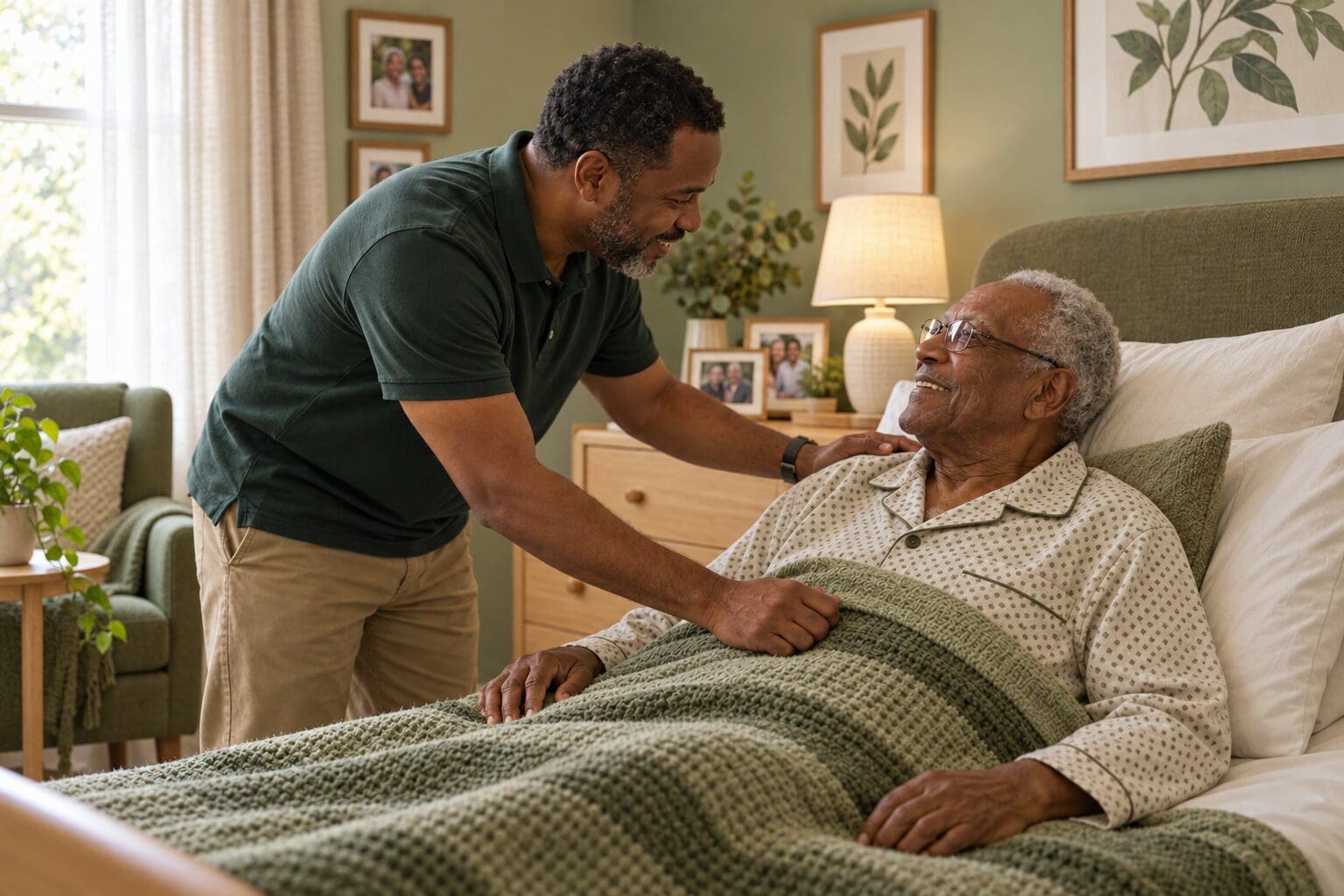
So we created “Marcus,” a fictional composite character drawn from conversations we’ve had with many families, to talk about what it was like to go from a nagging worry about his father Walter’s care to actually getting help.
A quick note before you read on: If your loved one is in immediate danger or needs urgent medical care, call 911 first. For other urgent health or safety concerns, don’t wait for a complaint process to run its course: tell the nurse in charge right away, and contact your state’s ombudsman (or, for suspected abuse or neglect, Adult Protective Services) as soon as you can. Reporting options and rules vary by state.
When Something Doesn’t Feel Right
What first made you worry about your dad’s care?
Little things that stacked up. Dad’s call light would be on for twenty or thirty minutes when I was there. He’d lost weight, and his lunch tray would be sitting untouched next to his bed because nobody had helped him eat. It seemed like a different aide every visit, and none of them knew his routine. Nothing dramatic, which is exactly why I kept second-guessing myself.
Did you say anything to the staff?
I did, politely. More than once I heard, “We’re a little short today.” I couldn’t tell if that was a rough week or a real problem, and I didn’t know who to ask besides the very people I was worried about.
Meeting the Ombudsman
How did you find out about the ombudsman?
There was a poster by the front desk with a phone number for something called the Long-Term Care Ombudsman. I’d walked past it for months without reading it.
What did you think that word meant?
Honestly, I pictured a government inspector with a clipboard who’d write the place up. I almost didn’t call because I thought it would feel like starting a lawsuit. It’s nothing like that. An ombudsman is an independent advocate for residents, and it’s free and confidential. They aren’t part of the nursing home, and they aren’t part of the state health department either.
What if there’s no poster, or you don’t know who to call?
There’s a state-by-state directory on the Consumer Voice website where you find your state’s ombudsman program and get the local contact information. If you can’t track yours down, the Eldercare Locator at 1-800-677-1116 can point you in the right direction.
What happened when you called?
Someone just listened. She asked who Dad was, which facility, and what I’d been seeing. I didn’t need proof or the right vocabulary. She said a representative would follow up with Dad himself.

The Part About Consent
Why would they talk to your dad instead of just working with you?
That was the part I didn’t expect. The ombudsman works for the resident, not the family, so they need his permission before sharing his information or taking action. If Dad had said he didn’t want anything done, they’d have respected that.
Did he want something done?
At first, no. He said, “I don’t want to cause trouble. I have to live here.” That’s a really common fear. The representative explained that residents have the right to raise concerns without retaliation, and she took her time with him. After a couple of conversations, he said yes.
What if he hadn’t been able to say yes?
I asked that, because Dad has some memory trouble on bad days. She told me there are pathways for a representative to act on a resident’s behalf when he can’t communicate his wishes. The key is telling the ombudsman up front.
What Happened Next
What did the ombudsman actually do?
She visited and talked with Dad privately, then with the staff and the administrator. It wasn’t a formal investigation. It was more like structured problem-solving on his behalf. Within a couple of weeks he had a regular aide, someone was helping him at mealtimes, and there was a note about it in his care plan.
How long did it take?
Nobody gave me a fixed timeline, and I learned it varies by state and by the complaint. Some things moved in days. Others took longer. When I hadn’t heard anything after two weeks, I called to ask for an update, and that was totally fine. Following up isn’t pushy. It’s part of it.
 Documenting and Following Up
How did you keep track of everything?
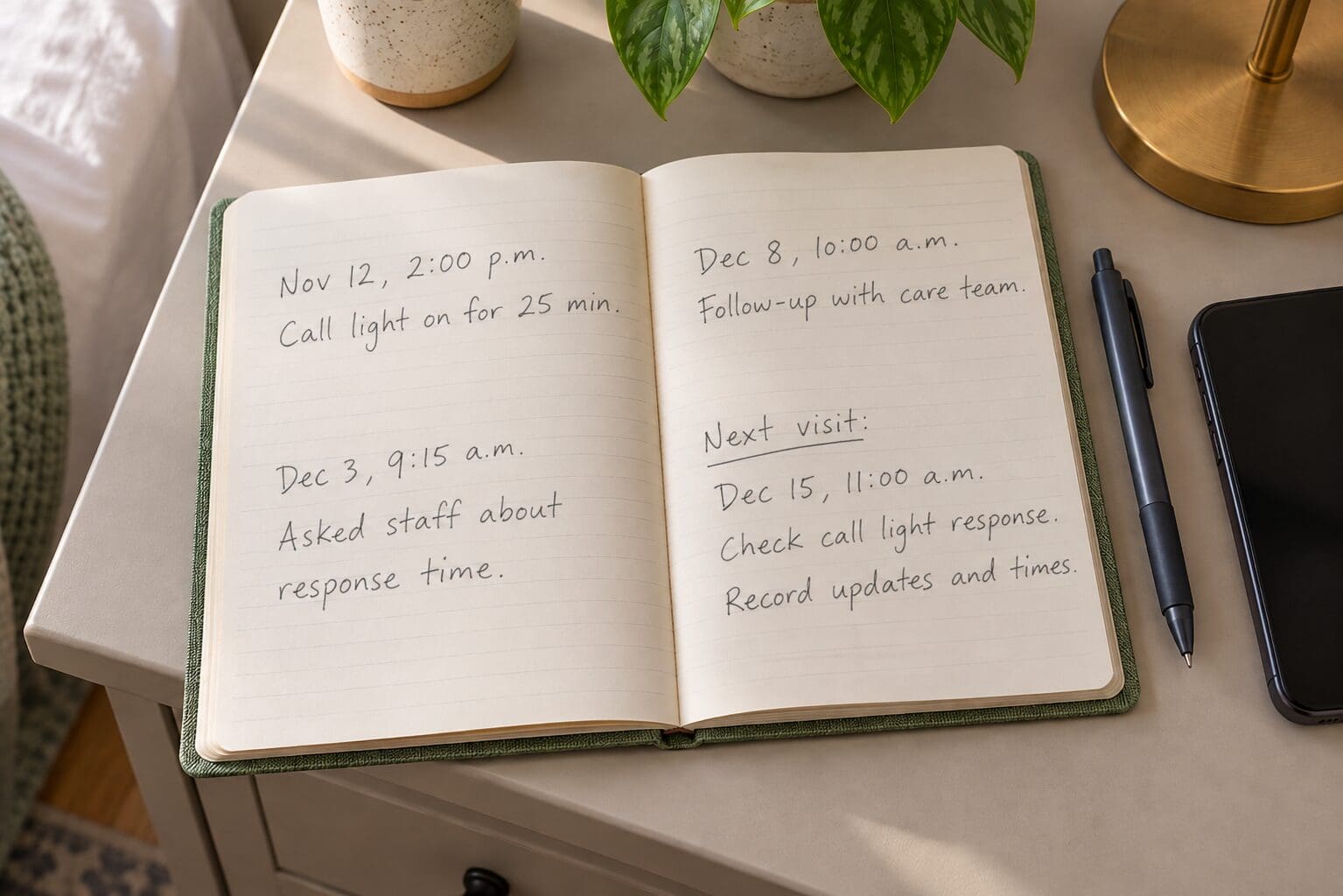
A notebook. Date, time, what I saw, who I talked to, what they said. When I asked the facility for something, I followed up with a short email so there was a written record.
Did it actually matter?
All the time. “It feels like the call light takes forever” gets a shrug. “On the 12th at 2 p.m., it was on for twenty-five minutes” gets a conversation.
When It’s Not Enough
Was there a point where the ombudsman wasn’t enough?
Dad kept losing weight and nobody could tell me why. I asked the ombudsman what came next, and she walked me through it. A formal complaint to the state survey agency can trigger an official inspection. Adult Protective Services handles suspected abuse or neglect. And if a resident is seriously harmed, talking with an attorney is a reasonable step. She was also very clear that if anyone is in immediate danger, you call 911 first.
Did you end up going down those paths?
I filed a complaint with the state. I never needed the rest, but knowing those doors existed made me feel a lot less alone.
What He’d Tell Other Caregivers
What would you say to someone who’s worried but hasn’t called yet?
Don’t wait for proof. Calling is free, it doesn’t commit you to anything, and the worst case is someone tells you what you’re seeing is within the normal range. Start writing things down today, even if you never end up using it.
What surprised you most?
How much it helped to have someone whose whole job was Dad’s voice. I’d been carrying it by myself for months.
Quick Reference: What You Can Do
- In an emergency, call 911 first. For other urgent health or safety concerns, tell the nurse in charge right away and don’t wait on a complaint process.
- Contact your state’s Long-Term Care Ombudsman. It’s free and confidential, and the number is usually posted in the facility. You can also use the Consumer Voice state-by-state directory or call the Eldercare Locator at 1-800-677-1116.
- Remember that the resident decides what the ombudsman shares or does. If your loved one can’t communicate, tell the ombudsman right away.
- Document dates, times, specifics, and who you spoke with, and follow up in writing.
- If you haven’t heard back in a couple of weeks, ask for an update.
- Escalate when needed: the state survey agency for a formal inspection, Adult Protective Services for suspected abuse or neglect, and 911 for immediate danger. Reporting options vary by state, so ask the ombudsman what applies where your loved one lives.
You can find contact information and more guidance on our Resources page, and our FAQs cover common questions about nursing home neglect.
“If you’re asking yourself whether something is wrong, that instinct deserves a real answer. You don’t need proof or legal training to make a call. You just need to start the conversation.”
Jeff Aidikoff, Managing Attorney, Bedsore.Law
If you have questions about a loved one’s care, our team offers free, confidential consultations. Schedule a consultation or call (844) 407-6737.
“Marcus” is a fictional composite character, not a specific real person, reflecting patterns commonly seen among families raising concerns about nursing home care. Background consulted: Administration for Community Living, Long-Term Care Ombudsman Program FAQ.