Caregivers in Context: A Sister Is Tired: Black Women, Family Caregiving, and the Burden of Being the One Everyone Counts On
Caregivers in Context: A Sister Is Tired: Black Women, Family Caregiving, and the Burden of Being the One Everyone Counts On

Reflections on the Saturday Night Live “Sister” Sketch and the Need for Equitable Family Caregiving
By Amera Bilal, Vice President of Programs and Policy, Caregiver Action Network
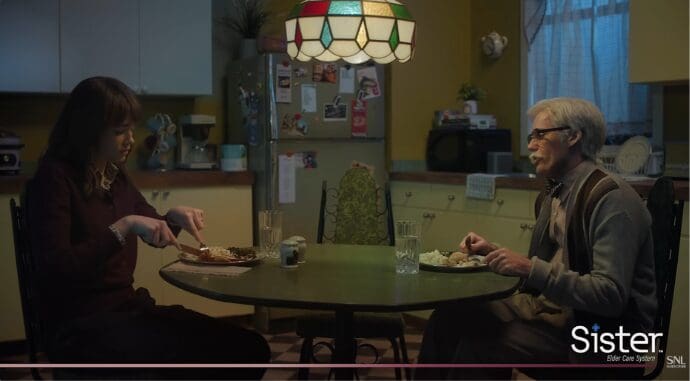
In the November 14 episode of Saturday Night Live, a mock ad pitches “Sister” as the answer to an aging parent’s care needs. What began as comedy has sparked a powerful conversation about a reality millions of women know all too well: when an aging parent needs care, there is often an unspoken assumption that the daughter, particularly the dependable sister, will figure it out.
Comment sections have been filled with testimonies from women who recognize themselves in the sketch. They know the sacrifices of interrupted careers, lost income, rearranged households, strained relationships, and the persistent expectation that “my sister will take care of it.”
For many Black women, this scenario reflects a deeply rooted cultural and generational expectation that women will be the keepers of family, protectors of elders, and the ones who somehow make everything work.
But while the sketch gives visibility to an often-overlooked experience, it raises a larger question: Why do we continue building family caregiving systems around the presumed sacrifice of one person rather than a responsibility we plan for and share?
And when does a sister get to say she is tired?
Trained to Care, But Never Asked to Consent
I come from a long line of sisters. Youngest sisters, to be exact.
I was my grandmother’s “apron baby,” always at her feet or wrapped in the pleats of her simple housecoats as she provided warmth and care throughout my childhood.
Every cooking lesson, every example of keeping house, every demonstration of hospitality became part of an ancestral collection of knowledge passed down through generations.
How to make a proper cup of coffee. How to prop pillows for a guest’s comfort. How to cool a stuffy room, prepare a meal, or maintain a home with dignity.
These were more than domestic lessons. They were expressions of love, service, and the belief that everyone deserves compassion, regardless of their circumstances.
At the time, I believed I was learning how to care for others temporarily, as guests, or as part of maintaining a home and family.
What I did not understand was that this intergenerational training was preparing me for something much larger: caring for the very people who taught me how to care.
I was perfectly trained for a job I hadn’t asked for and wasn’t sure I wanted. No one had asked me if I was willing.
My brothers, male cousins, and uncles were exposed to many of these same lessons. What differed was not their ability to provide care, but the expectation that they would actually use what they learned. That distinction matters.
For generations, Black women have been celebrated for their strength, resilience, and ability to hold families together. These qualities are sources of pride, but they can also falsely justify placing an inequitable burden on their shoulders.
When Our Elders Become the Ones Who Need Care
I watched my grandmother care for nearly everyone who needed her. My mother picked up that same mantle, providing care for elders, siblings, friends, and extended family.
From their examples, I understood that caregiving could be difficult and thankless. I also understood that it could be deeply rewarding and soul-affirming as we serve loved ones during their most vulnerable moments.
But eventually, the women who taught us how to care begin needing care themselves.
The people who prepared us for life have continued living, entering years when they deserve veneration, protection, and support.
They have arrived at elderhood carrying everything life has deposited along the way, including chronic illness, mobility challenges, grief, and sometimes limited preparation for aging.
Suddenly, those of us in the so-called prime of our lives confront new expectations.
After college, careers, raising children, building households, and overcoming personal struggles, we are expected to rearrange the lives we worked so hard to create.
Often, there is no formal conversation. No family meeting. No discussion about resources, boundaries, or what each person can contribute.
There is simply an assumption that the daughter will step forward.
 I have wondered how it could be expected, almost in silence, that I would willingly give up my ownness to provide care for others.
Had my family forgotten the achievements they celebrated as I came of age? What about the dreams I fought to preserve? What of the life I built, sometimes retrieving it from fires I did not set?
And why was I expected to become the next woman, the next sister, carrying this responsibility for my generation?
These questions do not diminish my love for my elders. They reflect the complicated truth that we can deeply love our families while questioning the fairness of what is being asked of us.
The Sister Is Not the Family Care Plan
Perhaps the most revealing element of the Saturday Night Live sketch is the assumption that the sister is the family’s default caregiving solution.
Her availability is presumed. Her sacrifices are normalized. Her capacity is rarely questioned until she reaches a breaking point.
In many families, caregiving responsibilities are not assigned through thoughtful conversations about skills, availability, finances, or willingness. Instead, they fall to the person who has historically managed family needs.
For Black women, that person is often a daughter, sister, niece, or granddaughter who has spent years serving as the family’s organizer, problem-solver, and emotional anchor.
But being capable of caregiving does not mean someone should be expected to do it alone.
Women may reduce working hours, decline promotions, leave employment, or spend personal savings supporting aging parents. They may manage appointments, medications, insurance, transportation, household expenses, and the emotional needs of everyone involved.
Meanwhile, less-involved siblings may underestimate the demands of caregiving.
A brother may believe occasional financial contributions are sufficient. An out-of-state sibling may assume the person living closest to their parent should manage everything. Others may offer advice without taking responsibility for implementing it.
Over time, these dynamics create resentment, fractured relationships, and burnout.
The problem is not always that family members do not care.
The problem is that caring about someone and taking responsibility for their care are not the same thing.
Equity Does Not Mean Everyone Does the Same Thing
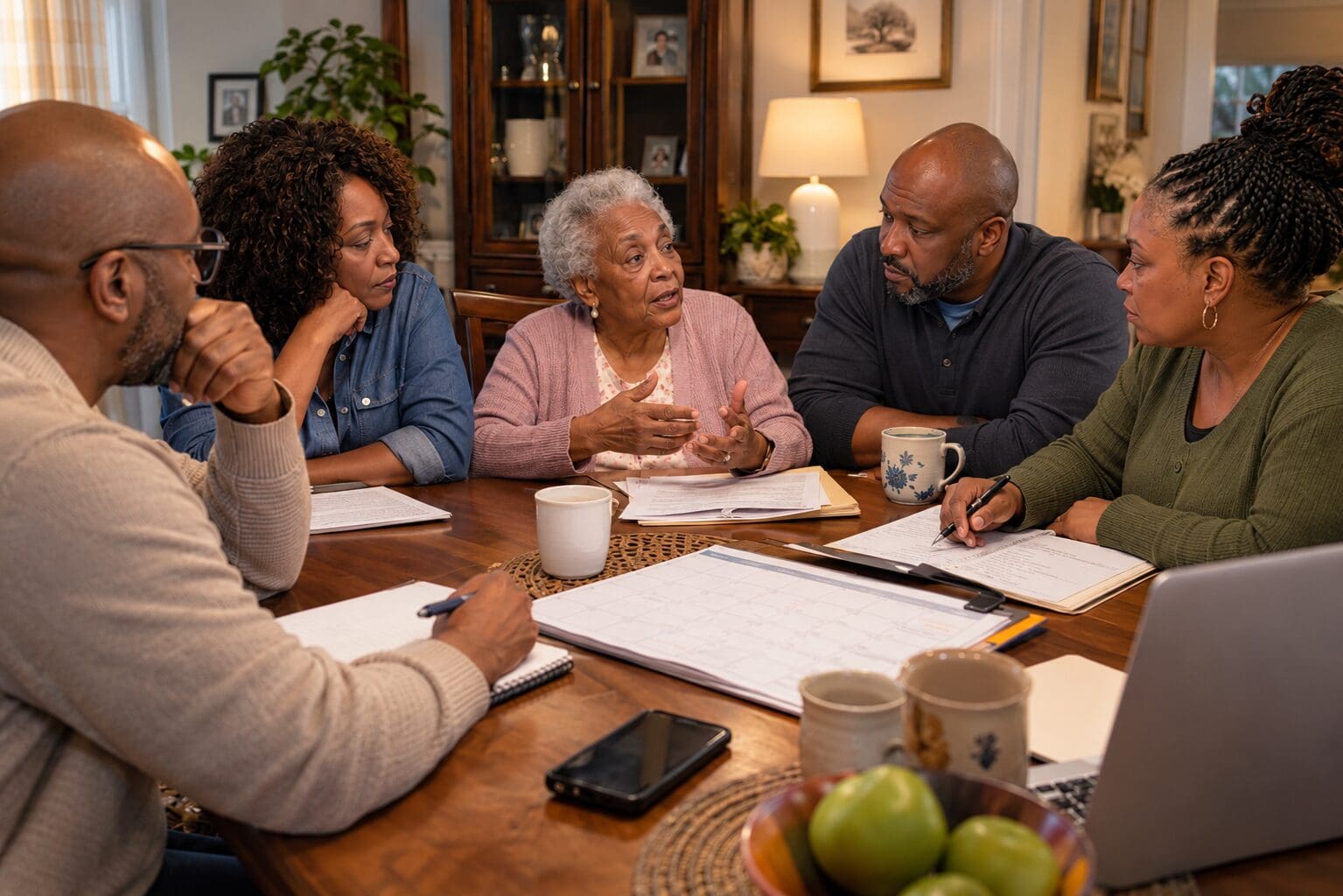 One of the greatest challenges in establishing a family care team is helping siblings understand the difference between equality and equity.
Equality suggests everyone contributes identical amounts of time, money, or assistance.
Equity recognizes that family members have different resources, responsibilities, and circumstances, but everyone should participate meaningfully.
A nearby sibling might provide transportation or attend appointments. Another living across the country could manage insurance paperwork, research care options, coordinate services, or contribute financially.
One sibling may provide hands-on care while another arranges respite services or paid assistance.
The goal is not identical assignments. It is ensuring no one carries a disproportionate burden simply because of gender, birth order, geography, or a history of being dependable.
This requires honest conversations about gender expectations, financial differences, sibling relationships, and unresolved family dynamics.
Importantly, the parent receiving care should have a voice in decisions about their life whenever possible.
What About the Caregivers We Still Don’t See?
While the “Sister” sketch resonates with women, we must acknowledge caregivers whose experiences remain invisible.
Not everyone has a sibling, much less a sister.
Millions of men provide loving, compassionate care for parents, spouses, children, and other loved ones. Sons, brothers, husbands, and fathers may carry responsibilities that challenge traditional expectations of masculinity, often without adequate recognition.
Only children have no siblings with whom to share responsibilities. Older adults without children may depend on friends, extended family, or community networks.
The caregiving crisis is not exclusively a women’s issue or simply a question of sibling fairness. It is a family, community, workforce, and societal challenge.
The more narrowly we define who a caregiver should be, the more likely we are to overlook those already doing the work.
Black Women Deserve More Than Praise for Their Strength
There is a particular tension in how we celebrate Black women’s caregiving.
We praise their sacrifice, honor their resilience, and speak proudly of generations of mothers, grandmothers, aunties, and sisters who held families together.
Yet we rarely ask what those women surrendered to fulfill those expectations.
We seldom ask whether they had a choice.
Our mothers and grandmothers taught us to care because they understood love, dignity, service, and family. But honoring their legacy should not require recreating every burden they carried.
Perhaps the greatest expression of gratitude is building something better: families where caregiving is shared, sons and daughters are equally expected to participate, boundaries are respected, and no one must surrender their identity to prove their love.
A Sister Is Tired. Now What?
The “Sister” sketch may have made us laugh, but the conversation it sparked deserves serious attention.
As families navigate aging, chronic illness, and long-term care, we must move beyond assuming one dependable daughter will always make everything work.
We need families that plan before a crisis, siblings who share responsibility, and communities that recognize caregiving as essential work.
At Caregiver Action Network, we recognize that caregivers need resources, education, and support. But families must also have difficult conversations that prevent caregiving from becoming an inequitable burden.
For Black women especially, this is an opportunity to redefine caring for our families without abandoning ourselves.
We can honor our elders without sacrificing our futures.
We can embrace our traditions without perpetuating unequal expectations.
We can love deeply and still insist on fairness.
Because a sister may be strong. A sister may be capable. A sister may be willing. But a sister is tired. And she should not have to do it all alone.
Caregiver Action Network provides education, resources, and support to family caregivers nationwide. Visit www.caregiveraction.org to learn more. If you’re figuring out how to share care or find support, call Caregiver Action Network’s Caregiver Help Desk at 855-227-3640.