SPOILERS AHEAD
The very title of Hulu’s hit summer series, Furious, suggests the kind of raw emotion viewers can expect. But the title is just a hint of the thorny emotional territory the series covers over its eight episodes. There’s plenty of fury, of course; but in one of television’s greatest and most rewarding surprises of the year, there is also something rarer – complex, authentic depictions of many forms of care.
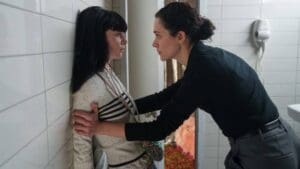 Furious follows what appears, at first glance, to be a tried-and-true plot: a cat-and-mouse chase between a newbie FBI agent and a serial killer. But it quickly reveals itself to be something much more unexpected, even subversive. For one, we know from the very first scene who the serial killer is, and she doesn’t quite fit the mold we’ve come to expect: she’s a petite young woman named Catherine Grace (Lola Petticrew). As a girl, she was trafficked into sex work and survived horrific abuse; now, she is bent on vengeance, targeting the men who assaulted her and caused the death of her best friend Isabel. She is the kind of person who would, in another story, be the victim of the killer – her suffering a gory pretext for the real story, instead of its substance.

The cat to Catherine’s mouse is Alice Black (Emmy Rossum), who has just transferred from the NYPD to the FBI, following a break-up with her abusive ex-boyfriend. At the beginning of the series, Alice is a believer: “It’s our duty,” she says, to solve crimes, and bring killers, rapists, and abusers to justice. By the final episode, her definition of justice – and the line between the victims she is trying to save and the perpetrators she is trying to catch – has been muddied by the corruption, trauma and negligence she encounters in law enforcement and her growing, complicated understanding of Catherine.
Furious hews closely to Catherine and Alice, two troubled individuals whose troubles, they discover, are much more alike than they seem. Amid the violence the two women suffer and inflict, there are glimmers of radiant humanity, connection, and care – between Alice and her friend and love interest, Danny; between Catherine and Isabel; between Catherine and Jean, the women’s shelter manager who offers a safe harbor to survivors; and between Catherine and Alice themselves. Furious consistently shines a light on the care that connects us, even among people traversing the darkest corners of humanity.
In one of the series’ most audacious storytelling choices, Catherine is revealed to work as a home care aide. From the moment her client, Alden (Steve Way), enters the frame in a motorized wheelchair, his rapport with Catherine is vividly realized by both actors: playful, intimate, affectionate. “You’ve been wiping my ass for three years,” he says. “Maybe one day, you’ll let me wipe yours.”
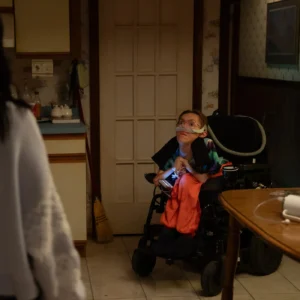 Alden is brilliantly played by actor Steve Way, who was diagnosed with Ullrich congenital muscular dystrophy at the age of 4 and has lived with considerable long-term and in-home care needs for nearly his entire life. A veteran stand-up comedian, Steve brings biting sarcasm and caustic wit to his role in Furious. Over the course of his arc, as Alden’s relationship with Catherine evolves into something more, Steve also brings Alden’s fierce romantic spirit to life. Even as the police officer interviewing him tries to turn him against Catherine, Alden is loyal, protective, and defiant: “You think love is only when people do everything you want them to do,” he says.
As much as Catherine cares for Alden, so, too, does Alden love and care for Catherine.
The focus on care is no accident. It’s something that has clearly been on creator and showrunner Liz Meriwether’s mind; her previous series, the comedy-drama Dying for Sex, followed a woman searching for sexual fulfillment in the wake of a terminal cancer diagnosis, which she navigates with the support of a dynamic care circle. In fact, it was at a panel discussion on caregiving and disability representation in media, co-hosted by Ai-jen’s organization Caring Across Generations, where Liz and Steve first connected. Their encounter inspired Liz to write the character of Alden specifically for Steve, casting him in the pivotal role just a few weeks after meeting him.
When we place caregivers, people with disabilities, and older adults at the heart of our culture and our media and tell diverse stories about the complexities of their lives, we unlock limitless creative possibilities. It’s a testament to the expansive storytelling potential of care that it has permeated two vastly different series across genres from the same creator, and at the time of this writing, has garnered 43 million watch hours across an estimated audience of 6 million for Furious alone.
Millions of people are watching and craving shows like Furious not just for the entertainment value, but because they depict real caregiving conditions they recognize or relate to. There are 130 million caregivers in the U.S. navigating active care relationships with children, aging or disabled loved ones, or both. That includes at least 11 million sandwich caregivers and nearly 44 million working caregivers, and doesn’t account for the 5.8 million direct care workers, like Catherine, who provide professional support to our families. Most caregivers are either unpaid or underpaid. Many of them are unsupported. Each of them has a story to tell, rich with unique emotional, relational and practical stakes that reveal fascinating new shades of our humanity. Care fits in every genre, because it is present in our relationships everywhere – in every life, in every family, in every community. Catherine is the ultimate anti-hero among a brimming cast of anti-heroes. Even she needs care, too.
Season two of Hulu’s Furious has already been greenlit. We can’t wait to immerse ourselves in the unexpected care stories it has in store – and the new stories, from still more creative voices, it will be sure to inspire.
Caregiving, Disability and Care Representation Resources
The care relationships depicted in Furious reflect the real experiences of family caregivers, professional care workers, people with disabilities and those who rely on care. These resources from Caregiver Action Network and Caring Across Generations offer practical support, opportunities to share care stories and tools for creating more authentic representations of care.
Caregiver Action Network Resources
- National Caregiver Help Desk: Free, confidential guidance and practical support for family caregivers. Call 855-227-3640 or access the Help Desk app using code CAN.
- Family Caregiver Toolbox: Guides, checklists, webinars and resources for caregivers at every stage of their journey.
- A Comprehensive Guide to Respite Care: Information to help caregivers understand respite care, explore support options and make space for their own well-being.
- Caregivers in Context: Cultural commentary exploring how caregiving is portrayed and understood through film, television, books and popular culture.
Caring Across Generations Resources


Caregivers In Context: Hulu’s Furious: Caregiving, Disability and the Care That Connects Us
Caregivers In Context: Hulu’s Furious: Caregiving, Disability and the Care That Connects Us
By: Marvell Adams Jr. (Caregiver Action Network’s CEO) and Ai-jen Poo (Caring Across Generations’ Founder and Executive Director)
SPOILERS AHEAD
The very title of Hulu’s hit summer series, Furious, suggests the kind of raw emotion viewers can expect. But the title is just a hint of the thorny emotional territory the series covers over its eight episodes. There’s plenty of fury, of course; but in one of television’s greatest and most rewarding surprises of the year, there is also something rarer – complex, authentic depictions of many forms of care.
The cat to Catherine’s mouse is Alice Black (Emmy Rossum), who has just transferred from the NYPD to the FBI, following a break-up with her abusive ex-boyfriend. At the beginning of the series, Alice is a believer: “It’s our duty,” she says, to solve crimes, and bring killers, rapists, and abusers to justice. By the final episode, her definition of justice – and the line between the victims she is trying to save and the perpetrators she is trying to catch – has been muddied by the corruption, trauma and negligence she encounters in law enforcement and her growing, complicated understanding of Catherine.
Furious hews closely to Catherine and Alice, two troubled individuals whose troubles, they discover, are much more alike than they seem. Amid the violence the two women suffer and inflict, there are glimmers of radiant humanity, connection, and care – between Alice and her friend and love interest, Danny; between Catherine and Isabel; between Catherine and Jean, the women’s shelter manager who offers a safe harbor to survivors; and between Catherine and Alice themselves. Furious consistently shines a light on the care that connects us, even among people traversing the darkest corners of humanity.
In one of the series’ most audacious storytelling choices, Catherine is revealed to work as a home care aide. From the moment her client, Alden (Steve Way), enters the frame in a motorized wheelchair, his rapport with Catherine is vividly realized by both actors: playful, intimate, affectionate. “You’ve been wiping my ass for three years,” he says. “Maybe one day, you’ll let me wipe yours.”
As much as Catherine cares for Alden, so, too, does Alden love and care for Catherine.
The focus on care is no accident. It’s something that has clearly been on creator and showrunner Liz Meriwether’s mind; her previous series, the comedy-drama Dying for Sex, followed a woman searching for sexual fulfillment in the wake of a terminal cancer diagnosis, which she navigates with the support of a dynamic care circle. In fact, it was at a panel discussion on caregiving and disability representation in media, co-hosted by Ai-jen’s organization Caring Across Generations, where Liz and Steve first connected. Their encounter inspired Liz to write the character of Alden specifically for Steve, casting him in the pivotal role just a few weeks after meeting him.
When we place caregivers, people with disabilities, and older adults at the heart of our culture and our media and tell diverse stories about the complexities of their lives, we unlock limitless creative possibilities. It’s a testament to the expansive storytelling potential of care that it has permeated two vastly different series across genres from the same creator, and at the time of this writing, has garnered 43 million watch hours across an estimated audience of 6 million for Furious alone.
Millions of people are watching and craving shows like Furious not just for the entertainment value, but because they depict real caregiving conditions they recognize or relate to. There are 130 million caregivers in the U.S. navigating active care relationships with children, aging or disabled loved ones, or both. That includes at least 11 million sandwich caregivers and nearly 44 million working caregivers, and doesn’t account for the 5.8 million direct care workers, like Catherine, who provide professional support to our families. Most caregivers are either unpaid or underpaid. Many of them are unsupported. Each of them has a story to tell, rich with unique emotional, relational and practical stakes that reveal fascinating new shades of our humanity. Care fits in every genre, because it is present in our relationships everywhere – in every life, in every family, in every community. Catherine is the ultimate anti-hero among a brimming cast of anti-heroes. Even she needs care, too.
Season two of Hulu’s Furious has already been greenlit. We can’t wait to immerse ourselves in the unexpected care stories it has in store – and the new stories, from still more creative voices, it will be sure to inspire.
Caregiving, Disability and Care Representation Resources
The care relationships depicted in Furious reflect the real experiences of family caregivers, professional care workers, people with disabilities and those who rely on care. These resources from Caregiver Action Network and Caring Across Generations offer practical support, opportunities to share care stories and tools for creating more authentic representations of care.
Caregiver Action Network Resources
Caring Across Generations Resources
Co-Author’s Note (Marvell):
I am a blissful consumer of streaming series, but I initially did not have Furious on my list of “must watch”. Not because of disinterest. I just had a lot on my watch list already! I had not explored much about the show, but the algorithm had other plans as I came across a clip of Steve Way at a promotional event for Furious. Steve caught my attention because I was lucky enough to hear and see him give a fireside chat nearly a year ago at CareFest. This unique event, biannually hosted by Caring Across Generations, is one of the most impressive gatherings of caregivers, care advocates, carefluencers and leaders in the US. Led by its Founder & Executive Director, Ai-jen Poo, CAG not only uplifts and amplifies caregiving stories but the nonprofit organization methodically works with creators, producers and writers to ensure care is represented in TV and film. It was during this event I found myself repeatedly moved to tears because so many of the shared stories unlocked parts of my own caregiving journey that I had lost connection with. I am forever grateful to CAG for creating a space for such fulsome connection amongst a community of carers.
Co-Author’s Note (Ai-jen):
Transforming how we think about and value care requires us to ambitiously take on the charge of transforming narratives, mindsets and culture at scale.Pop culture — especially film and television — are where many of us find the stories that shape how we think and feel about the world we live in. Our multimedia entertainment company, Give Not Take Media, develops and produces creative digital and film and TV entertainment stories that speak directly to the 130 million caregivers in the U.S. navigating active care relationships. And through our work at Caring Across Generations, I’ve been lucky enough to get to know Steve Way – as a member of our Creative Care Council, Steve has worked with us on everything from our Protect Medicaid campaign to our behind-the-scenes work organizing the entertainment industry around care. I was thrilled to see Steve appear in Elizabeth’s new show, and even more thrilled to learn that Caring Across played a role in bringing these two brilliant artists together through a shared passion for storytelling with care. I’m in awe of the depth he brought to the role – what a star! And I can’t wait to bear witness to the new creative possibilities Furious and Steve’s performance will lead to next.