Caregivers in Context: Sara Bareilles’ Good Grief and the Love That Lives Beyond Loss
Caregivers in Context: Sara Bareilles’ Good Grief and the Love That Lives Beyond Loss
By: Allison Borthwick (Caregiver Action Network’s Director of Communications and Digital Media)
From grieving parents and lifelong friends to navigating infertility and caring for a partner through mental health challenges, Sara Bareilles’ album and documentary offer a moving reflection on caregiver grief.
There is a particular comfort in growing up alongside an artist whose music seems to grow with you.
For those of us who have loved Sara Bareilles since “Love Song” first introduced us to her unmistakable voice, her music has become a companion through life’s reinventions. She has given us permission to be brave, reminded us that we are more than the circumstances that shaped us, and made private heartbreaks feel a little less lonely. There is something extraordinary about an artist who can make you feel understood at 17 and then, nearly two decades later, reach you somewhere entirely different.
With Good Grief, Bareilles meets us in one of life’s most complicated places: where love and loss become impossible to separate.
Her seventh studio album, accompanying documentary and tour follow years marked by profound change, including the deaths of two beloved friends from cancer, her experiences with anxiety and depression, and the physical and emotional challenges of infertility and IVF with her husband, actor Joe Tippett.
 A two-time Grammy Award winner and Tony and Emmy nominee, Bareilles has built a remarkable career spanning music, Broadway’s Waitress, Into the Woods and television’s Girls5eva. Yet Good Grief feels different, not because it abandons the warmth and honesty of her work, but because it shows what happens when someone so gifted at finding the right words encounters experiences that resist explanation.
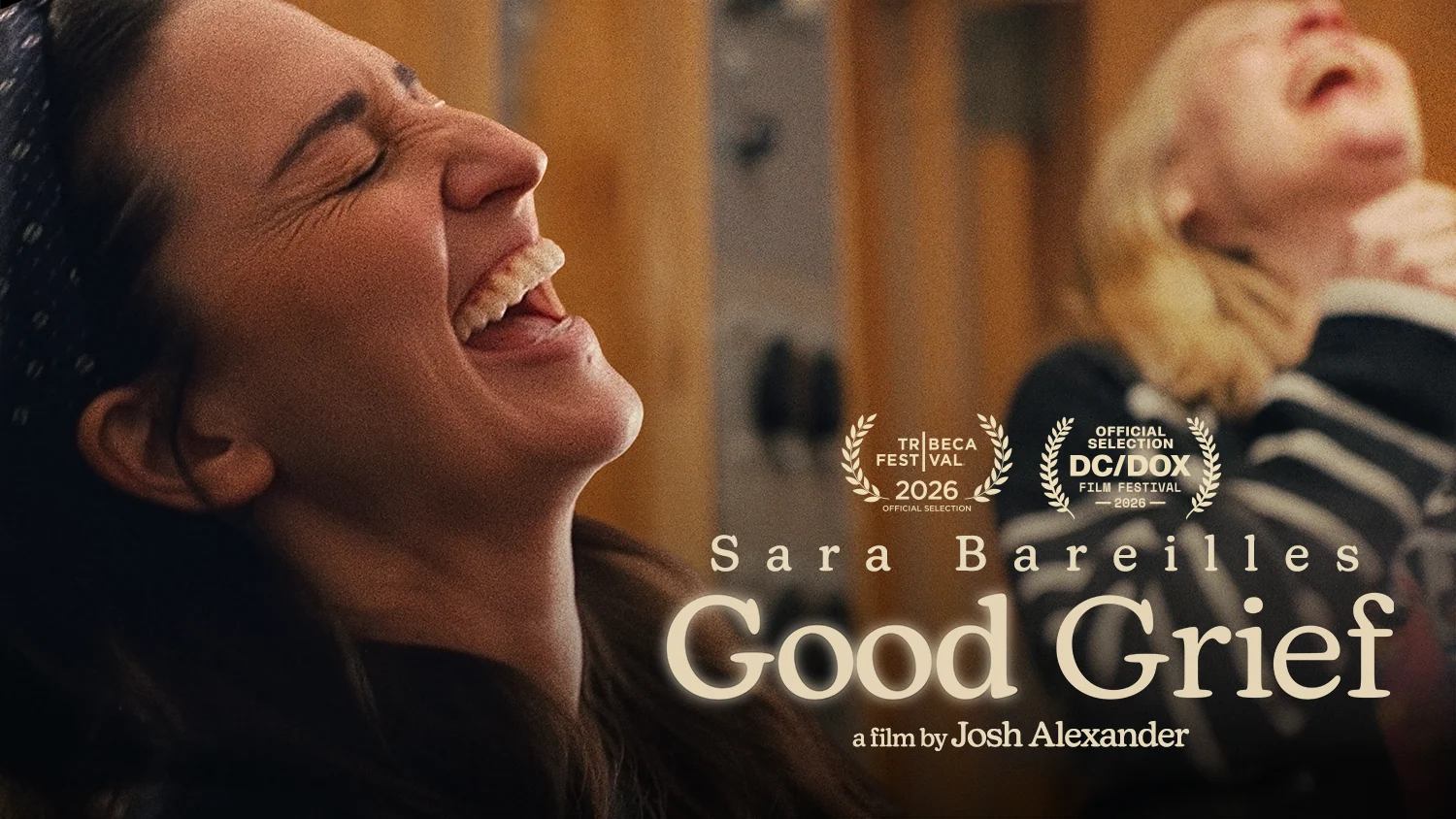
Directed and produced by Josh Alexander, alongside producer Daniel J. Chalfen, the documentary Sara Bareilles: Good Grief premiered at the 2026 Tribeca Festival and was featured at DC/DOX. Its executive producers include P!nk, Glennon Doyle and Abby Wambach, while the album features collaborations with Aaron Dessner, Ingrid Michaelson, Brandi Carlile and the late poet Andrea Gibson.
As the Good Grief tour draws to a close, the music feels less like the conclusion of a difficult chapter than the beginning of a conversation we need to keep having. For family caregivers, grief does not always begin with death. Sometimes it begins while we are still caring, still hoping and still learning to live alongside a future we never imagined.
Grief Is Alive, Even When Everything Changes
At one point in the documentary, Bareilles offers a thought that illuminates everything that follows: “Grief is alive. It’s the most alive thing there is.”
Grief rarely behaves the way we expect. It moves through us, changes shape and finds its way into moments we thought belonged to happiness. Sometimes it settles into the background, only to return through a familiar song, a photograph or an ordinary Tuesday when we realize how much someone is missing.
 In “Still Crying,” co-written with Aaron Dessner, Bareilles captures the exhaustion of revisiting sadness and wondering why we have not moved beyond it. The song acknowledges the quiet pressure we place on ourselves to heal according to someone else’s timeline.
For caregivers, those tears may come long before a final goodbye. We grieve when a parent living with dementia no longer remembers a family tradition, when a spouse loses another piece of independence, or when a diagnosis changes the future we pictured together. We may mourn the relationship we once had while remaining deeply devoted to the person still beside us.
This is anticipatory grief, and it asks us to hold two seemingly incompatible truths at once: someone we love is still here, and something precious has already changed. After caregiving ends, grief may take another form. The appointments, medications and daily routines that once consumed our lives can leave an unexpected emptiness, alongside the task of rediscovering who we are without the person we cared for.
Perhaps Bareilles offers a gentler way to understand these experiences. Grief is not evidence that we are failing to move forward. It is part of a love that continues to evolve.
The People Who Carry Us, and the People We Carry
Two of the most heartbreaking stories behind Good Grief involve Bareilles’ longtime friends Chad Joseph and Gavin Creel. Joseph, her college roommate, best friend and former tour manager, died in 2020 after a stage 4 lung cancer diagnosis. Four years later, Bareilles lost Creel, the Tony Award-winning Broadway performer and cherished friend, to a rare and aggressive cancer.
For anyone who has accompanied a loved one through late-stage cancer, these stories hold a painful familiarity. There are treatments and waiting rooms, difficult conversations and moments of hope, alongside ordinary memories that remind us of life before the diagnosis. There is also the helplessness of wanting desperately to make someone better while realizing that love, however fierce, cannot guarantee a different outcome.
 In “Just a Kid,” Bareilles remembers Joseph through the decades of friendship that preceded his illness. He had once stepped away from his own career to help guide hers, offering support that became part of the foundation of her life. Years later, their relationship reminds us how naturally care can change direction.
The people who once carried us may eventually need us to carry them. Adult children become caregivers for aging parents. Spouses trade places between offering strength and needing reassurance. Friends who have spent decades celebrating milestones may find themselves navigating medical decisions and final goodbyes.
When someone dies, we often grieve more than their absence. We miss the person who knew our history, remembered our younger selves and understood parts of us nobody else ever will.
That feeling extends into “Home,” inspired by a conversation between Anderson Cooper and Stephen Colbert about losing their fathers at young ages. The song explores how parental loss becomes woven into a life, changing how we understand family, time and ourselves.
For those who have cared for a mother or father, there is something especially poignant about becoming the person they depend on. We may spend years helping the people who raised us navigate medications, appointments or changing abilities, yet some part of us will always long to be their child. After they are gone, grief finds us in unexpected places: a question we wish we could ask, a milestone they never reached, or another year we have lived that they did not get to experience.
For parents raising children while grieving their own, that love becomes something we carry forward. We repeat familiar expressions, offer comfort the way we once received it and recognize pieces of those we have lost in the families we are building.
Caring for Each Other Through the Life We Did Not Expect
Not every loss explored in Good Grief involves death. Some of the documentary’s most vulnerable moments follow Bareilles and Tippett as they navigate infertility, multiple rounds of IVF and the possibility that becoming parents may not happen as they imagined.
Infertility carries grief that can be difficult for the outside world to recognize. There may be no established rituals for mourning the pregnancy that did not happen, the child you imagined or the future you quietly began building. Yet those losses can be profound, especially amid the physical demands of treatment, financial uncertainty and exhaustion of deciding whether to try again.
There is also a recognizable form of caregiving within that experience. One partner may endure injections, medications, procedures and physical effects while both navigate the waiting, hope and disappointment. They take turns offering reassurance, advocating for one another and finding the strength to face another appointment when neither feels strong. Neither can promise everything will work out, but they can continue showing up.
That reciprocal care becomes essential when mental health challenges enter a relationship. Bareilles has spoken openly about anxiety and depression, while “Nervous Breakdown,” co-written with Ingrid Michaelson, explores how distress can complicate our ability to connect with those trying to support us.
Sometimes caring for a partner means helping manage treatment or encouraging professional support. Other times, it means listening without judgment, recognizing when someone needs space or accepting that love does not require every answer.
In “Salt Then Sour Then Sweet,” her collaboration with Brandi Carlile, Bareilles embraces the contradictory emotions that make us human. The song feels especially meaningful for caregivers and parents, whose lives are rarely divided neatly into difficult days and beautiful ones. We can be grateful and exhausted, hopeful and frightened, devoted to someone and desperate for rest. None of those feelings diminishes our love.
The Love That Remains
Perhaps the most remarkable thing about Good Grief is that, despite its subject matter, it never feels entirely consumed by sadness. Love appears everywhere: in the friendships Bareilles remembers, the vulnerability she and Tippett share, and the musicians who gather around her as she returns to creating music. The recording process itself becomes an act of community care, transforming private experiences into songs that allow strangers to recognize themselves in one another.
 As the tour draws to a close, those songs have taken on another life in rooms filled with people carrying their own stories of love, loss and hope. Hearing new songs like “Home,” “Just a Kid” and “Still Crying” alongside longtime favorites such as “Brave” and “She Used to Be Mine” reminds us how our relationships with music evolve. The songs may remain the same, but we are not always the people we were when we first heard them.
For longtime fans, there is something affecting about hearing the artist who once encouraged us to speak bravely acknowledge that some experiences cannot be conquered through courage alone. Sometimes someone we love becomes seriously ill and does not recover. Sometimes fertility treatments fail, a parent changes before our eyes, or someone who has always been our source of strength suddenly needs us to be theirs. Sometimes, years later, we are still crying.
But grief does not mean love has stopped doing its work. It lives in the lessons our parents taught us, the friendships that shaped us, the tenderness we offer our children and the ways we continue showing up for our partners. Maybe that is what Bareilles means when she says grief is alive: not simply the absence of someone or something we loved, but the continuing presence of that love in a life forever changed.
Caregivers understand that better than most. We cannot reverse every diagnosis, make every treatment successful or protect the people we love from every hardship. But we can accompany one another through uncertainty and recognize that sometimes simply being there is an extraordinary act of care.
The tour may be ending, but the invitation at the heart of Good Grief remains: to make room for the full experience of loving and losing, and to remember we do not have to carry it alone.
Caregiver Action Network Resources for Grief, Cancer and Mental Health
- Anticipatory Grief for Family Caregivers: Understanding grief that begins before a loved one’s death.
- Navigating Caregiver Grief: Support for ambiguous loss and life after caregiving.
- Help for Cancer Caregivers: Practical and emotional support for cancer caregiving.
- Families, Addiction & Mental Health Network: Resources for families navigating mental health and substance use.
- Caregiver Toolbox: Guidance on stress, anxiety and daily caregiving.
- National Caregiver Help Desk: Free confidential guidance at 855-227-3640, Monday–Friday, 8 a.m.–7 p.m. ET.
Because caregiving and grieving are not always separate chapters of our lives. Sometimes they unfold together, each changing the way we understand the other. We care because we love. We grieve because we love. And in all the ways that matter, love continues to live through both.