How We Grieve: Learning About Death Care Through Comedy, Film, and Art
How We Grieve: Learning About Death Care Through Comedy, Film, and Art
By Meghan Ross, Guest Contributor
In late November 2022, I woke up from a depression nap (for those not in the know, it’s simply a nap you take when you’re depressed), and immediately texted my brother, Justin: Call me in the AM I just thought of our next project idea. That idea was spurred on by the realization that all our previous films had been meager attempts to process the losses of our two closest aunts (and comedic inspiration) within years of each other.
Except, the films we made were really a distraction from us actually processing our grief. Like spending two years making a feature documentary about one aunt’s life, and despite interviewing all of our family for it, never talking openly off-camera about the losses of either aunts, for fear of upsetting anyone. Ah yes, the age-old immigrant offspring approach of suppressing one’s trauma for the comfort of others.
Justin and I had been criticizing our family’s inability to talk about these losses, when in reality, we were upholding that same tradition. My brother and I also share a fear of our own mortality, and like most people, we’re deeply uncomfortable addressing that as well. So naturally, we decided to force ourselves to talk about both grief and death on-camera, with the help of people who were making these conversations more accessible (and even enjoyable).
And so, our traumedy docuseries How We Grieve was born. Nearly a year after I sent my brother that post-depression nap text (and after many conversations that surmised that TV execs also don’t want to have this conversation), Justin and I decided to make it ourselves. We knew the first topic we wanted to explore was comedy, since another one of our family traditions was using humor to deal with discomfort. At that point, my friend and Brooklyn-based comedian, Ben Wasserman, had been hosting a brilliant variety show called LIVE AFTER DEATH in funeral homes and cemeteries across the country, and he was about to finish his monthly residency at Blair-Mazzarella Funeral Home in Brooklyn before taking the show on the road.
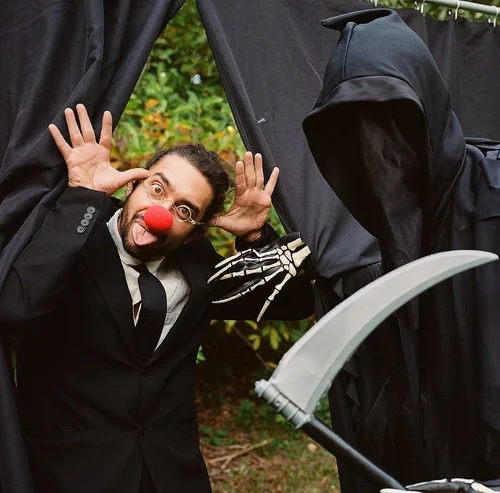
Photo by Jeff Musillo, courtesy of Ben Wasserman.
Ben was kind enough to let us follow him around as he prepared for that last show of his run, helping him tape up his routinely-destroyed gravestone piñata and carrying the rest of his props into a room typically used to mourn loved ones during a wake. I had first met Ben while we were both performing at a standup show hosted in an intimate, Italian restaurant years prior, so we were already used to doing comedy in spaces not intended for comedy. We also both turned to comedy immediately after the passing of our loved ones – Ben used standup as an outlet after his dad, granddad, uncle, and four friends died one after another, and I dedicated my late night comedy show to my Aunt Dawn a week after she passed, writing the part-monologue, part-eulogy on the flight home from her funeral service.

I don’t want to give too much away (because I want you to watch episode one and see for yourself how great Ben is), but I’ve never laughed harder or cried easier during a comedy show than I did from being in the audience during LIVE AFTER DEATH. And that was just the beginning of Justin and I learning how the least traditional ways of processing grief would be the most meaningful. Shortly before we filmed with Ben in September 2023, I met Austin-based filmmaker and death doula, Wendy Corn, who was working on her own documentary about end-of-life care and introduced us to the term “death literacy”. She was going to be a panelist at the Dying to Know Film Festival in Hudson Valley and with permission from the festival’s co-founder/producer Caren Martineau, we captured what it was like to attend a film festival where the programming is entirely centered on death and dying.
Wendy also connected me to the lively death doula community here in Austin, and not long after we started filming our docuseries, I found out I was pregnant, so I was suddenly spending as much time talking to birth doulas as death doulas. Although birth doulas are considered more mainstream than death doulas, it made perfect sense to me that a caretaker role existed for the two most significant (and universal) events in a person’s life – their birth, and their death. It was also unsurprising that the people I met in both fields were incredibly kind, supportive, and selfless. When it comes to bearing witness to these two life events, those are the type of people you want by your side.
 Being pregnant during production of How We Grieve and the birth of Justin’s first child in December 2023 influenced the questions we were asking ourselves about how we’d broach this subject with our own kids. So we looked to the experts who were already doing it better than anyone we knew: Sesame Workshop, who’d been thoughtfully showing people of all ages how to handle these tough conversations since before we were even born; and Good Grief, a nonprofit not far from where we grew up who provided unlimited and free support to children, teens, young adults, and their caregivers. Here’s where I use the excuse of wanting you to watch episode two rather than have me attempt to describe how crucial Good Grief’s work is, but just trust that this is less of a shameless plug and more of a recommendation to support an organization you’ll wish existed in every state. The lasting impact Good Grief has on the community it serves is exemplified perfectly through the Furtado family, who we follow to one of Good Grief’s Nights of Support.
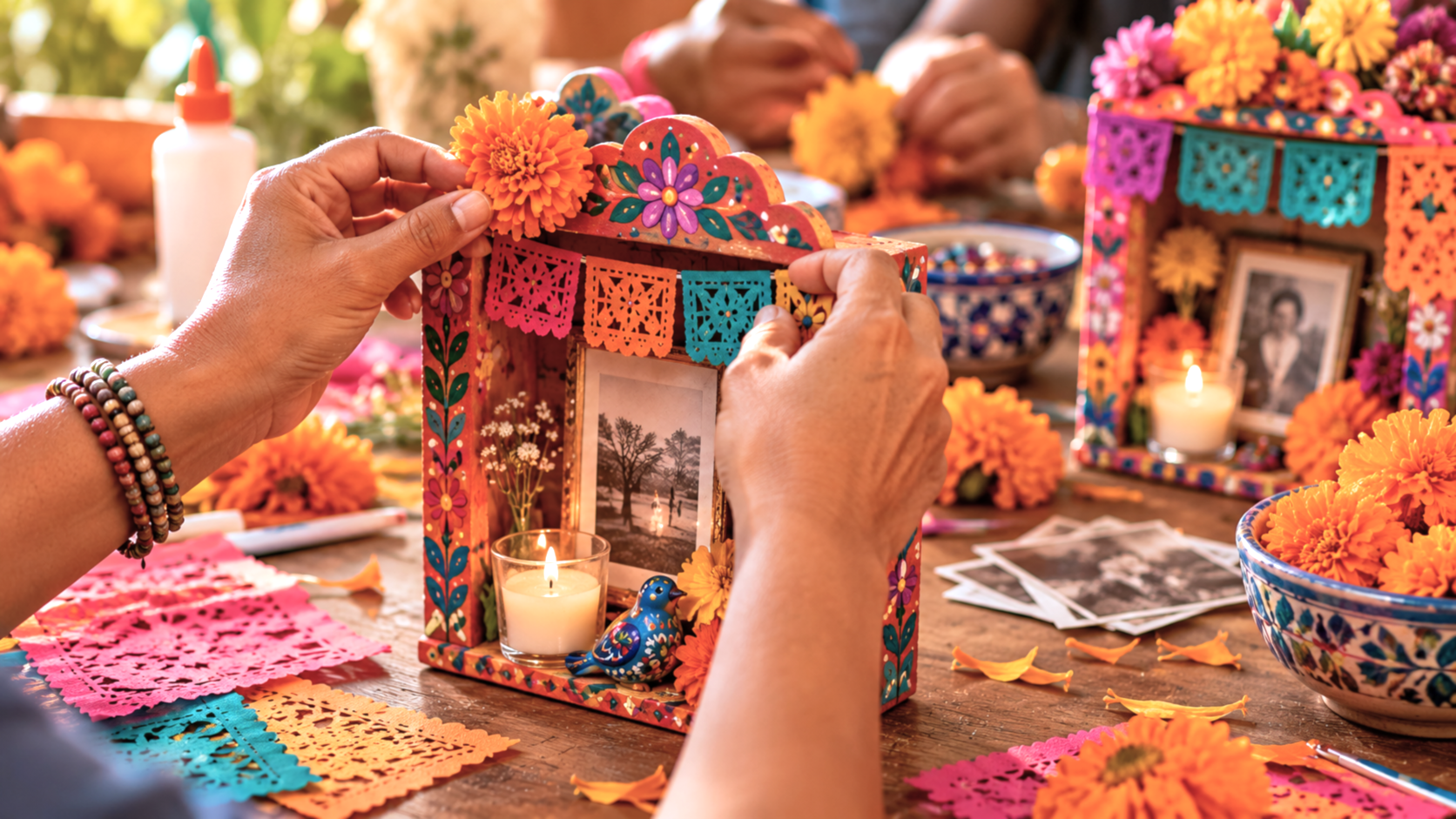
While looking for more opportunities to process grief unconventionally here in Austin, I came across local artist and former funeral director Allie García and her Ofrendas Grief Art workshops she hosts out of her home. Sitting around a table with Allie and her friends – which included a mix of artists, previous art class students, and a former co-worker from the funeral home – we make nichos while talking about grief, mental health, and what it means to show up for people Going Through It or at the end of life. Recollecting on her previous job, Allie describes being that final touch of care when handling the body of someone who passed as, “One of the privileges we had being in the care center… we could have been that very last sense of closure and touch.” She reminded me why I had so quickly understood the role of death doulas to be as significant as the role of birth doulas, giving the same care you’d give someone as if they were alive. You’ll have to watch episode three to see how that beautiful intentionality shows up in the way Allie teaches her art workshops, too.
Despite nearly four years of reading and researching and talking and thinking a lot about grief and death, I still wouldn’t say I’m anywhere close to being an expert or even that much more comfortable with the reality of dying. But the biggest takeaways I can credit making this show taught me:
You don’t have to grieve alone. There’s community when you look for it.
There’s not one way to grieve (so don’t force people who grieve differently from you to adapt your approach – instead, meet them where they’re at).
When it comes to showing up for someone who is grieving: actions over platitudes.
You can still be afraid of death (shoutout to my OCD triggers), but living with an appreciation of the life we do get is so much more enjoyable than living with the fear of losing it.
Watch How We Grieve on the PBS app for free and check your local listings for broadcast dates/times.