Caregivers in Context: The Boroughs and the Fear of Losing Ourselves
Caregivers in Context: The Boroughs and the Fear of Losing Ourselves
By Nichole Goble
Director of Community Initiatives, Caregiver Action Network
SPOILER ALERT: This article contains major spoilers for Season 1 of The Boroughs on Netflix.
There is something deeply funny — and honestly a little rude — about the Duffer Brothers finishing Stranger Things and apparently deciding, “What if we did the same thing, but with retirees and existential dread?”
And somehow? It works.
Netflix’s The Boroughs follows a group of older adults living in a sprawling retirement community in the New Mexico desert who slowly uncover a horrifying secret lurking beneath their neighborhood. There are glowing-eyed creatures crawling through hidden tunnels, mysterious disappearances, an immortality conspiracy, and enough body horror to make any horror fan perk up immediately.
But underneath all the sci-fi weirdness and monster chaos, The Boroughs is really about something much more human: aging.
More specifically, it’s about the fear of losing independence, memory, identity, purpose, and connection.
And for caregivers? Those fears can feel painfully familiar.
The Horror of Becoming “Too Much”
When we first meet Sam Cooper (Alfred Molina), he is grieving deeply after the death of his wife Lilly. His daughter Claire moves him into The Boroughs retirement community, a place that had originally been decided on by Lily as her and Sam’s next home before she passed, after he becomes increasingly isolated and withdrawn. Sam immediately rejects nearly everyone around him, including his relentlessly cheerful “transition manager” Kayleigh and the community’s AI assistant, Seraphim, which he promptly unplugs. The series seems to use these tropes as aging right off the top of the series so they can subvert them over an 8-episode season.
Sam is angry. Disoriented. Untethered.
He keeps seeing flashes of Lilly around him and struggles to distinguish grief from hallucination.
And this is one of the first places where The Boroughs quietly taps into something caregivers and families often experience in real life:
the fear that grief, trauma, depression, or cognitive changes will be dismissed as “just aging.”
Throughout the series, Blaine Shaw — the unsettling CEO of The Boroughs — repeatedly weaponizes the assumption of cognitive decline against residents. Residents who question what is happening are threatened with institutionalization inside “The Manor,” a locked memory care facility where older adults are sedated, isolated, and dismissed as confused or senile.
That fear hits hard because many older adults genuinely worry about losing credibility, autonomy, and control over their own lives.
And caregivers often find themselves walking an incredibly difficult line:
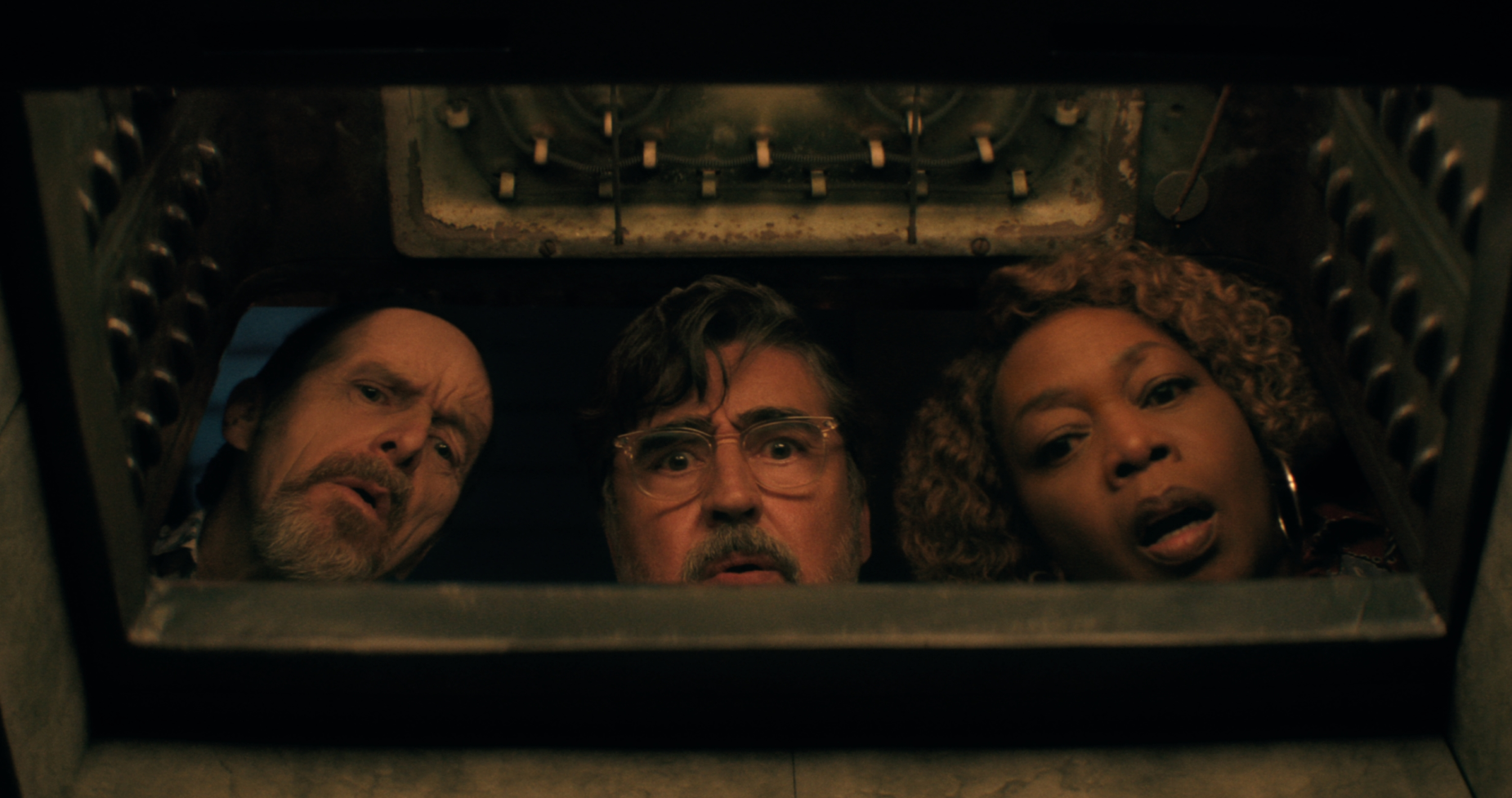
How do you protect someone you love while still respecting their independence and voice?
How do you know when concern becomes overreach?
How do you support safety without taking away dignity?
Those are not simple questions. And The Boroughs refuses to offer easy answers.
Caregiving and Grief Often Happen at the Same Time
One of the strongest emotional threads in the series is Sam and Claire’s relationship.
Claire is trying to help her father after the death of her mother, but she is grieving too. Meanwhile, Sam becomes so consumed by his own loss that he fails to see how much Claire needs him emotionally.
That dynamic feels incredibly real.
Caregivers are often expected to immediately shift into “helper mode” after a major diagnosis, loss, or health crisis, even while processing their own emotions. Adult children caring for aging parents may simultaneously be navigating grief, fear, burnout, financial stress, parenting responsibilities, work obligations, and anticipatory grief.
And sometimes grief itself changes how people communicate.
Sam withdraws.
Claire becomes frustrated.
Neither fully understands the other’s pain.
There is a scene later in the season where Claire, believing Sam is experiencing paranoia and delusions, brings him back to The Manor against his wishes.
It is heartbreaking because Claire is not trying to hurt him. She genuinely believes she is protecting him.
That tension is something many caregiving families recognize:
the terrifying uncertainty of wondering whether you are making the “right” decision for someone you love.
Community Caregiving Matters
One of the things The Boroughs gets very right is that caregiving rarely happens alone.
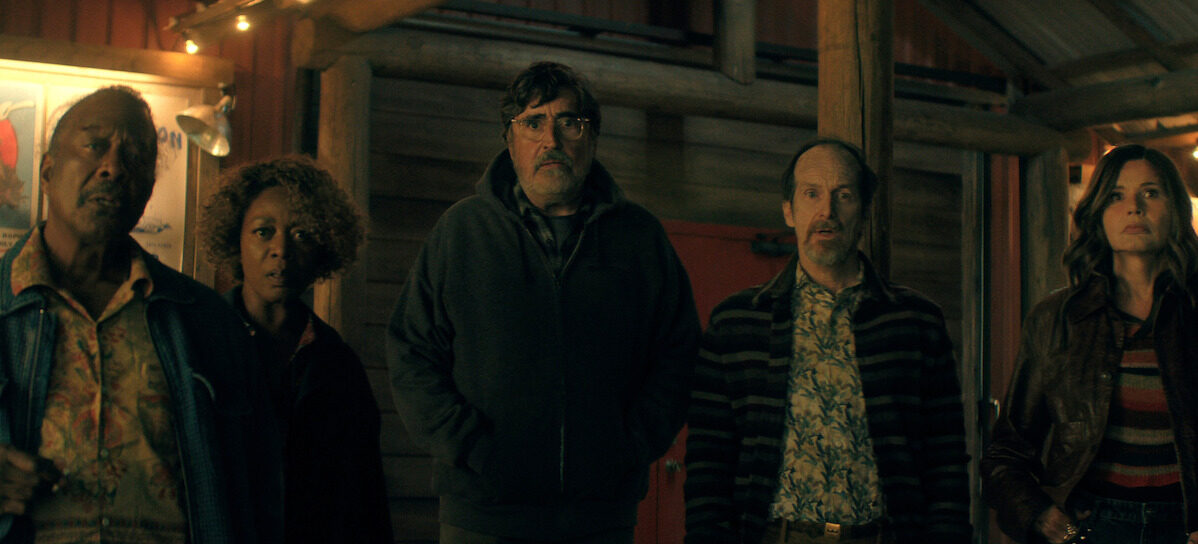
Sam eventually forms a deeply chaotic little found family with:
- Renee, the fitness instructor with zero patience for nonsense
- Judy, a retired journalist who treats every interaction like an active investigation
- Art, Judy’s husband and resident desert mushroom philosopher
- Wally, a retired doctor with stage 4 prostate cancer
- Paz, one of the younger security guards who slowly realizes the system he works for is harming residents
None of them are related but they care for one another anyway. That matters.
It is reported that there are over 100 million family caregivers in the United States alone. A number of caregivers included in that number aren’t blood relatives but are neighbors, friends, partners, faith community members, and chosen family.
Sometimes caregiving starts quietly:
- checking in after an appointment
- bringing groceries
- driving someone to treatment
- helping organize medications
- noticing when something feels “off”
- sitting with someone through grief
Over time, those acts become lifelines.
The series repeatedly shows the group protecting one another emotionally and physically — even when they argue, make questionable decisions, or absolutely should not be handling firearms during monster attacks.
Especially Judy.
The Fear of Cognitive Decline
One of the more unsettling reveals in the series is that the creatures are feeding on cerebrospinal fluid from residents, accelerating cognitive decline and memory issues in ways that blend seamlessly into assumptions about aging.
It is horror logic, yes, but metaphorically it lands because it speaks to our shared fears and anxieties of aging and cognitive decline. It also speaks to the caregivers’ supporting a loved one experiencing:
- memory loss
- confusion
- personality changes
- communication difficulties
- behavioral changes
can be emotionally devastating
And caregivers often report feeling isolated, overwhelmed, or unsure where to turn for help.
Caregiver Action Network offers resources that may help families navigating cognitive changes, dementia, or complex caregiving conversations, including:
- Lighting Your Way: A Guide for Family Caregivers
- Navigating Alzheimer’s: Caregiving Approaches for Neuropsychiatric Symptoms
- The National Caregiver Help Desk
No one should have to navigate those challenges alone.
The Seduction of “Fixing” Aging
One of the most interesting questions The Boroughs asks is whether aging is something to be accepted or something to be conquered. No characters embody that tension more than Blaine and Anneliese.
At first glance, they seem to have achieved what so many people dream about. Blaine is the charismatic founder and CEO of The Boroughs, while Anneliese, his wife, appears elegant, youthful, and untouched by time. But beneath the surface lies the show’s central secret that, decades earlier, they discovered Mother and her offspring, using their blood to extend their lives far beyond what should be possible.
For Blaine, immortality becomes a means of control. He builds an entire system around preserving life at any cost, even if that means exploiting the very residents he claims to serve. Aging, illness, and death are not realities to be accepted; they are problems to be solved.
Anneliese’s relationship with immortality feels more complicated.
When Art discovers a mysterious peach that temporarily restores his youth, Anneliese immediately pursues it, desperate to recreate its effects. Her actions suggest something many viewers may recognize: the fear is not simply death itself. The fear is what aging represents—the loss of vitality, independence, identity, and the version of ourselves we once knew.
It is a theme that resonates far beyond science fiction.
Caregivers often witness firsthand how our culture talks about aging. We are surrounded by messages promising to reverse it, slow it down, or prevent it altogether. At the same time, many older adults face assumptions that growing older means becoming less capable, less valuable, or less deserving of autonomy.
The Boroughs pushes those fears to their logical extreme.
The show’s most horrifying revelation isn’t the creatures hiding beneath the community. It’s the idea that an entire system has been built on the belief that growing older is a failure rather than a natural part of being human.
The series offers an important counterpoint through Wally, a retired physician living with stage 4 prostate cancer. When Wally learns about Mother’s regenerative abilities, he sees the possibility of curing disease and alleviating suffering. Unlike Blaine and Anneliese, he isn’t chasing youth. He is confronting mortality in a very real and immediate way.
And that distinction matters.
There is a difference between wanting to erase aging and wanting more quality time with the people we love.
Caregivers understand this better than most. Many have found themselves hoping for one more treatment option, one more clinical trial, or one more breakthrough that might offer a loved one additional time or comfort.
The desire to ease suffering is deeply human.
But The Boroughs ultimately suggests that there is a danger in viewing aging itself as something that must be defeated. By the end of the season, Blaine cannot imagine a life that ends. Anneliese cannot accept a life that changes. Wally, meanwhile, must decide whether a miracle achieved through exploitation is a miracle worth pursuing at all.
For caregivers, that message may feel surprisingly familiar.
Aging is not a problem to be solved. The challenge is finding ways to support dignity, purpose, autonomy, and quality of life throughout the aging journey—and helping our loved ones understand that their value does not diminish simply because they are growing older.
Planning Is an Act of Care
Another recurring theme throughout the season is how quickly crises escalate when people are isolated or unable to communicate openly.
Real caregiving situations can feel similarly overwhelming when there is no plan in place.
Important conversations may include:
- healthcare wishes
- advance directives
- long-term care preferences
- financial planning
- transportation support
- housing considerations
- emergency contacts
- caregiving roles among family members
These conversations can be uncomfortable, but they can also reduce confusion and stress later.
Caregiver Action Network offers resources that may help families begin these discussions, including:
- Advance Directives: Essential Healthcare Planning Tools
- Caregiver stress and grief resources
- Community support and peer connection programs
The Lasting Lesson of The Boroughs
For all its monsters, exploding alien cave mothers, and aggressively haunted retirement community vibes, The Boroughs is ultimately a story about people trying desperately to hold onto one another.
It understands something many caregiving families know intimately: aging does not erase humanity.
Older adults still want:
- autonomy
- purpose
- intimacy
- friendship
- adventure
- dignity
- joy
- connection
And caregivers are not simply “helpers.” Caregivers are individuals standing side by side with their navigating grief, fear, responsibility, exhaustion, hope, and love — often all at the same time.
If you are caring for an aging loved one, Caregiver Action Network offers education, resources, and support for every stage of the caregiving journey. Visit CaregiverAction.org or contact the National Caregiver Help Desk at 855-227-3640 to connect with support, resources, and someone who understands.